Sustainable aviation fuel no longer needs another conversation about whether it can be done. The technologies exist. The feedstocks exist. The capital exists. The demand exists. The question now is how quickly we turn all of that into production. SAFV1 is about what happens next.
Sustainable aviation fuel explained. Industry developments examined.
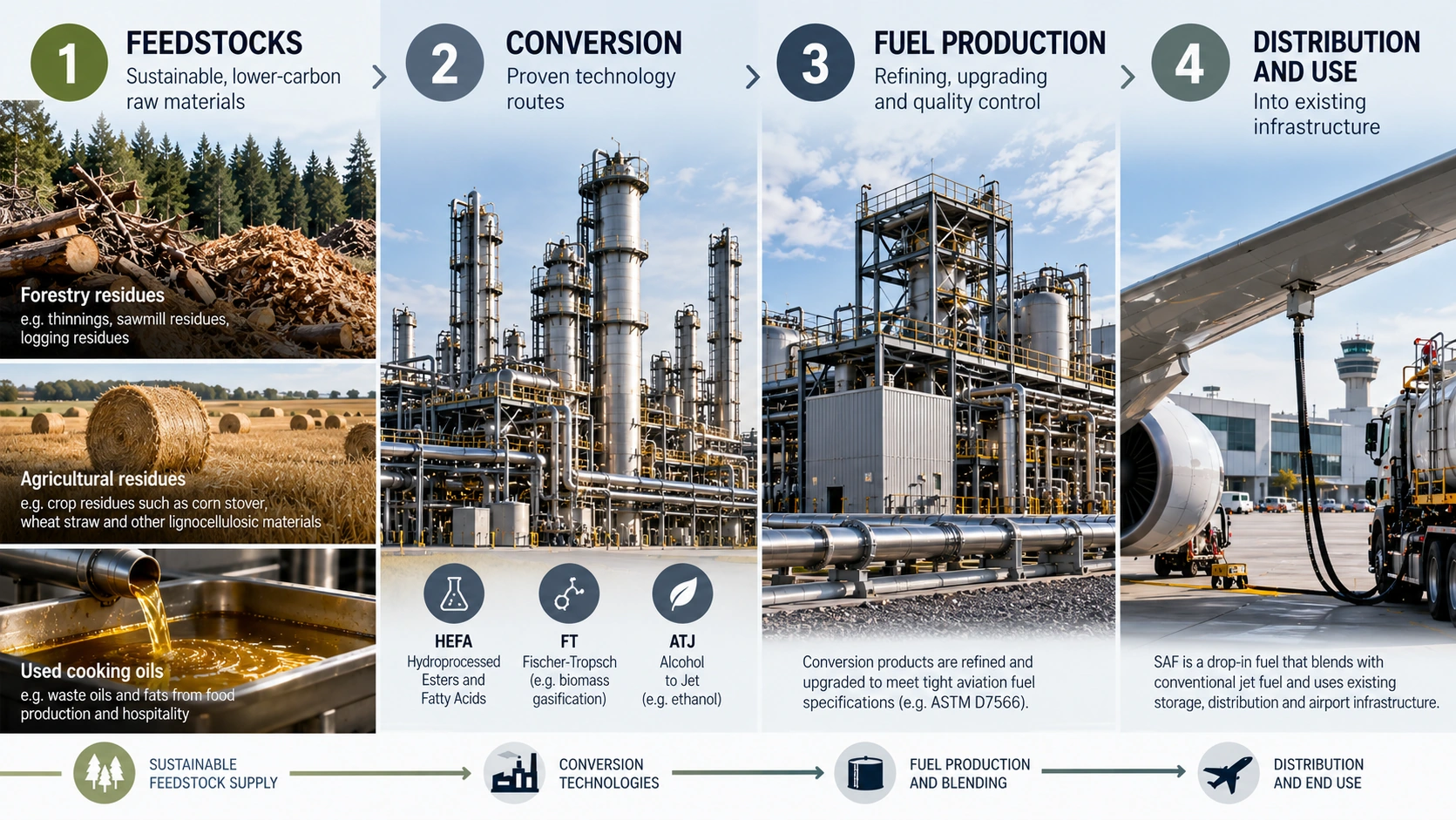
Understand how SAF is made, what qualifies it for use, and what turns a proposed project into dependable supply. Follow verified production, technology, infrastructure and policy developments.
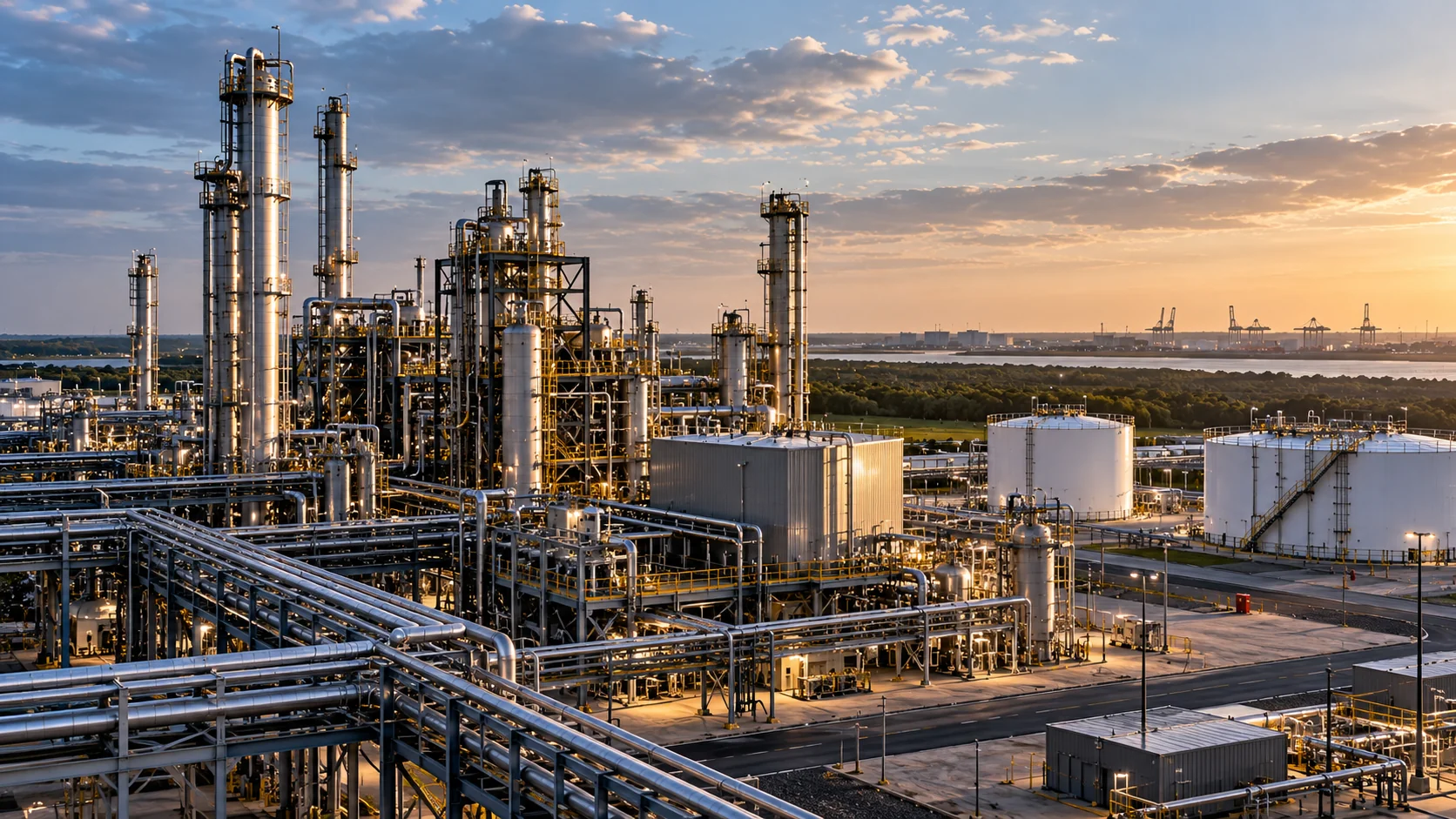
Industrial-scale fuel production depends on the integration of processing equipment, utilities, storage and distribution infrastructure. Conceptual illustration: SAFV1. AI-generated; does not depict a real facility.
Industrial-scale SAF depends on the whole production system. Feedstock, energy, equipment, certification and infrastructure have to work together before announced capability becomes dependable supply.
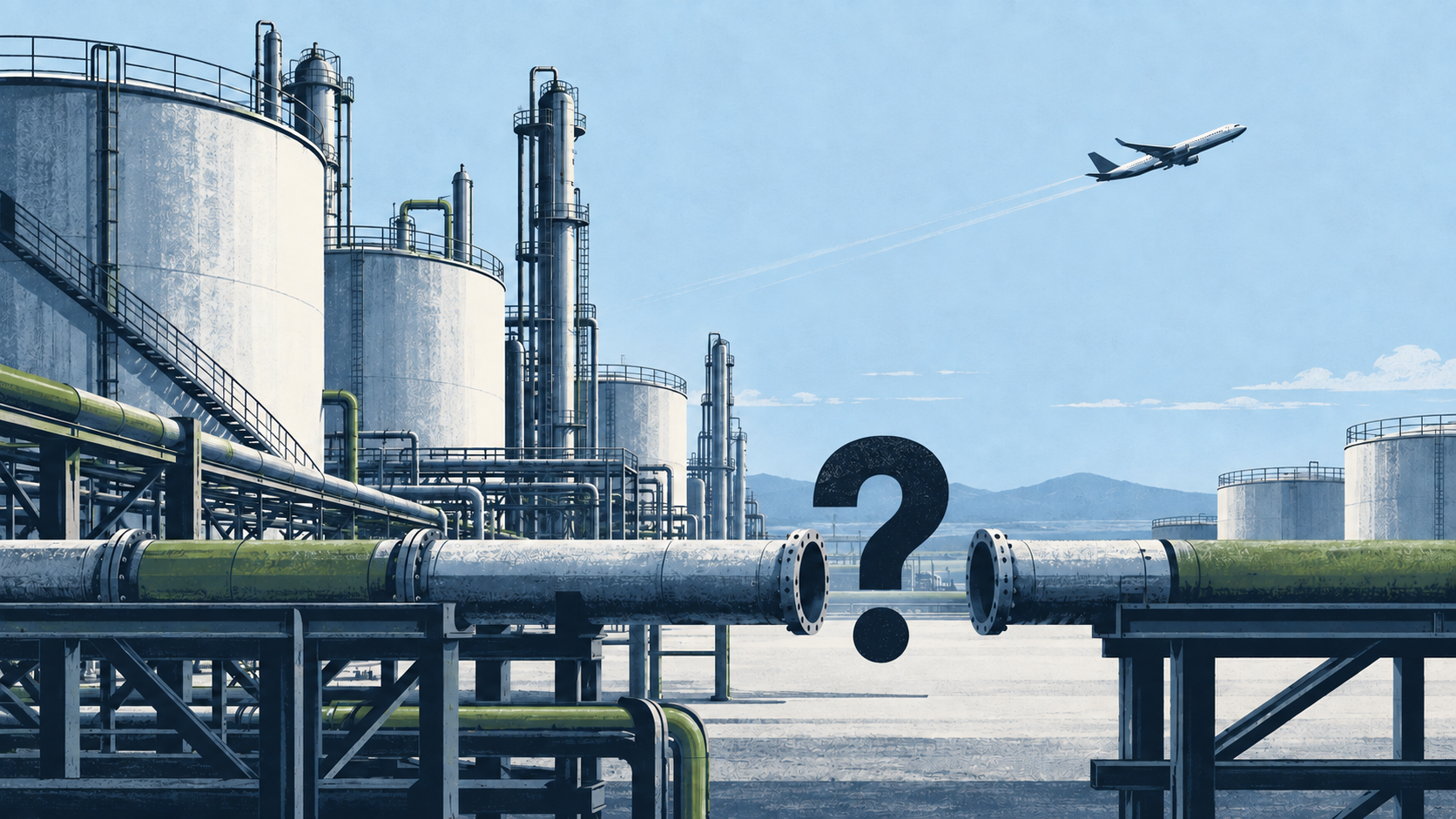
Neste started making SAF in Rotterdam. Shell walked away from a separate project in the same city. Their contrasting decisions reveal the industrial and commercial hurdles between announced capacity and dependable fuel supply.
Former Neste aviation leader Thorsten Lange and former United Airlines sustainability executive Angela Foster Rice are among four senior appointments announced by the SAF market intermediary.
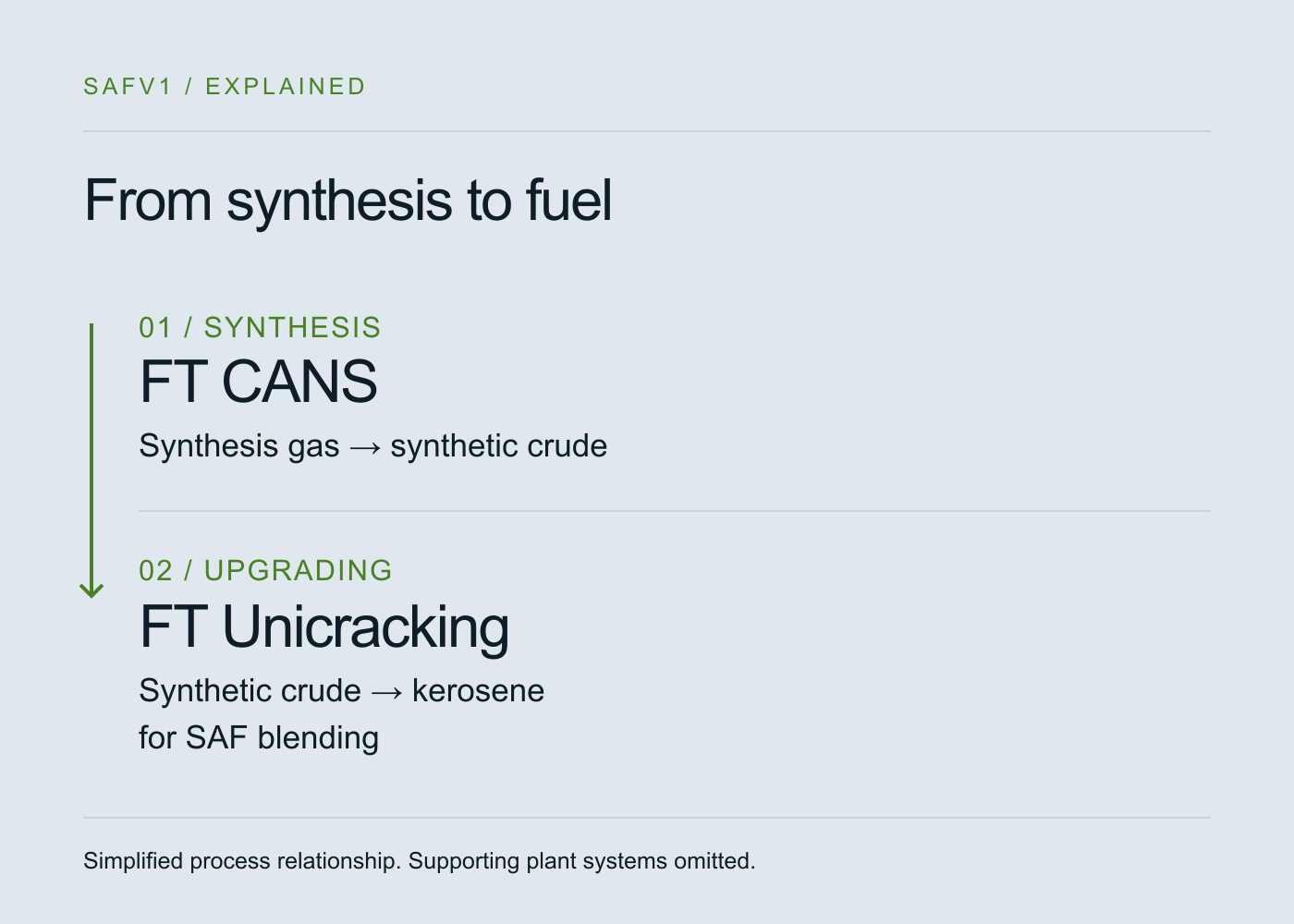
The strongest SAF case for Honeywell’s acquisition of Johnson Matthey’s Catalyst Technologies business lies in how fuel synthesis and upgrading fit together. Customers had already selected the pairing before the deal closed.
Singapore’s pooled procurement trial has delivered SAF into Changi’s fuel network. For markets still weighing their next move, the competitive risk is letting others build the relationships and experience first.
US policy continues to support domestic biofuels. Turning that support into aviation fuel requires clear rules, realistic investment timelines and a place for forestry alongside crops and livestock.
Pension capital, infrastructure investors and commercial banks are backing SAF development. The most revealing transactions show how funding connects to construction and future fuel sales.
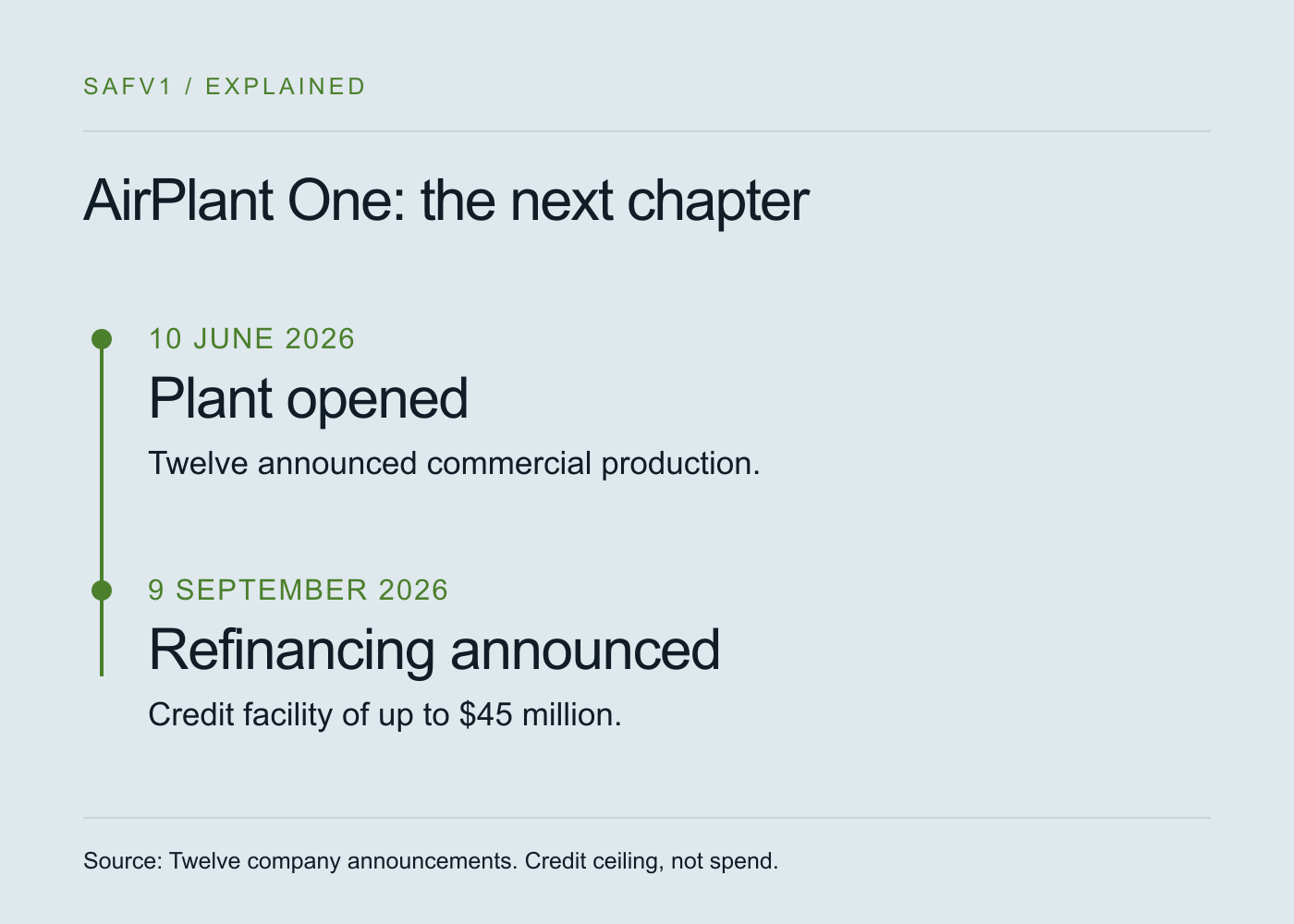
AirPlant One has opened, and Twelve has secured refinancing to support its next phase. The significance lies in putting equipment to work and building the operating experience needed for expansion.