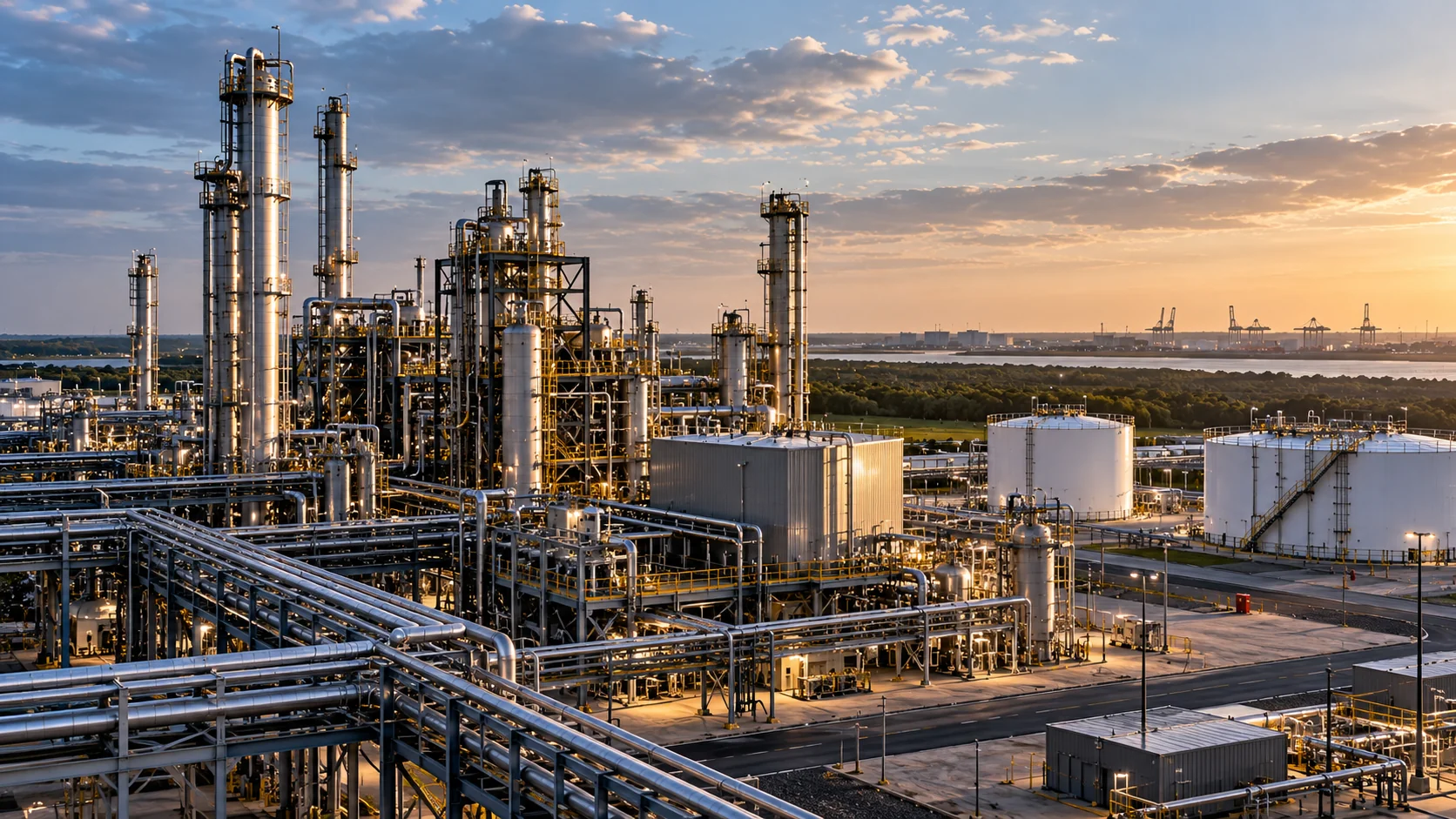
AI-generated conceptual illustration; does not depict a real facility.
FEATURE · By SAFV1 Editorial Team · Evidence reviewed 19 October 2026
A technology can make jet fuel. A dependable industry needs the whole production system to work, from the first feedstock delivery to the customer’s fuel tank.
The most useful question to ask of the next SAF project announcement is simple: what has actually become more dependable?
A conversion process may have passed a technical test. A customer may have signed an agreement. A plant may have made its first fuel. Each matters. The harder achievement is getting usable material, equipment, utilities, certification and customers to work together repeatedly, at a cost the business can sustain.
That is the industrial challenge now facing sustainable aviation fuel. In its 14 October 2026 update, IATA expected global SAF production of about 2.4 million tonnes in 2026, around 0.8% of jet fuel use. This is the airline association’s forecast for the year, not a completed-year production tally.
Start with the constraint, not the technology label
SAF is a family of fuels and production routes. Different routes move the difficult part of the job to different places.
HEFA processes use oils and fats. Alcohol-to-jet starts with alcohols such as ethanol. Biomass-to-liquids can use gasification, gas cleaning, Fischer–Tropsch synthesis and upgrading. Power-to-liquid production combines hydrogen and a carbon source, making suitable electricity supply central to the proposition. ICAO’s conversion overview explains the technical families; it does not establish that every feedstock listed qualifies as sustainable in every market.
The IEA’s 2025 assessment places alcohol-to-jet, gasification-based biofuels and hydrogen-based synthetic fuels in the early stages of commercialisation. Familiar equipment names should therefore prompt a more precise question: what has been demonstrated for this integrated plant, using these inputs, at this scale?
For a reader assessing a project, the pathway name is the beginning of the inquiry. It is not a verdict on readiness, cost or environmental performance.
A resource becomes useful when it reaches the plant
A regional estimate of biomass or waste oils can reveal an opportunity. A working plant needs agreed quantities and quality, delivered when required, with records showing where the material came from.
For solid feedstocks, ask how they will be collected, stored and prepared. What happens when moisture changes? Who pays for contaminated or rejected loads? For liquid inputs, ask the same questions about specification, pretreatment and competing demand.
The revealing cost is usable, qualifying feedstock at the point of conversion. A low price at source tells only part of that story. Handling, transport, losses and variability belong in the calculation. A plentiful resource on a map is useful evidence of potential; it is not an operating supply chain.
A credible description also explains what happens when the preferred supplier misses a delivery. Resilience needs a practical answer, not an assumption that every truck arrives on time.
The interfaces are part of the technology
A production plant joins several jobs together. One unit prepares the input. Others convert it, clean intermediate streams, synthesise hydrocarbons or upgrade them into products. Heat, water, electricity, hydrogen and controls connect the process.
A strong operating record for one unit helps. It leaves open whether the units have worked together under comparable conditions, how they respond to variable inputs and who is responsible when one unit’s output limits the next.
LanzaJet’s 13 November 2025 announcement illustrates the distinction. The company reported jet fuel meeting ASTM specifications at Freedom Pines Fuels and described bringing multiple technologies into operation as one plant. That is a company-reported production milestone. The release does not by itself establish a sustained annual output or the economics of every future alcohol-to-jet facility.
The next useful operating update would disclose what ran, for how long, with what inputs and how much qualifying product resulted. A technology supplier’s name cannot answer those questions on its own.
Energy belongs in the production plan
Energy affects both the cost of fuel and its lifecycle emissions. Its importance varies by pathway. Hydrogen may be needed for conversion or upgrading; power-to-liquid production makes the electricity and hydrogen system particularly consequential.
A project needs to explain where its energy comes from, when the connection or supply becomes available and how price changes affect operations. Ordering an electrolyser and securing dependable electricity are different milestones.
The environmental accounting also extends beyond the plant gate. ICAO’s lifecycle methodology includes feedstock, processing, transport, fuel conversion, distribution and combustion, alongside applicable land-use effects. A renewable label on the finished product cannot replace that assessment.
Making fuel is only part of delivering it
Fuel must enter a controlled distribution system. Blending, testing, storage, terminal access and transport can all stand between production and airport supply. Compatibility with aircraft does not make those arrangements automatic.
There is evidence of delivery today. On 16 September 2026, Neste said its extended United Airlines agreements covered SAF supplied at Amsterdam during June to August and deliveries at Chicago O’Hare beginning in July, with supply there planned through June 2027. The reported deliveries and the future supply period establish different things. Neither is a complete plant-level production account.
That distinction is useful well beyond this example. An offtake agreement establishes a commercial relationship; a production report describes an asset; a delivery report describes fuel reaching a destination. Good reporting keeps those measures separate.
Technical qualification and sustainability answer different questions
Technical specifications concern suitability for use. Sustainability evidence concerns origin, environmental performance and eligibility under a particular programme.
CORSIA eligible fuels must come from producers certified through an ICAO-approved sustainability certification scheme. That framework is not a universal passport into every mandate or incentive programme. Producers and buyers must check the intended market’s requirements.
Records and traceability therefore belong in production planning. A plant can make technically suitable fuel while still needing to establish the characteristics on which a customer’s compliance claim depends.
Demand must become dependable revenue
Policy creates reasons to buy. It does not settle a plant’s selling price, start-up performance or working-capital needs.
An offtake agreement is an agreement to buy output. Its value depends on the terms: volumes, commencement conditions, product requirements, pricing and delivery responsibilities. A public headline rarely discloses enough to judge all of them.
The commercial questions are concrete. Who funds a delayed start? What happens if feedstock or energy costs rise faster than the selling price? Who carries the cost of a rejected batch? How much output is genuinely covered by binding purchases?
These are editorial tests, not claims about any named project’s confidential contracts. They explain why a market can want more fuel while a particular investment still struggles to proceed. IEA’s priorities of predictable demand, accessible finance and integrated supply chains point towards the same need to develop the whole system together.
Judge the next announcement by what it establishes
Begin with the milestone: planned, financed, under construction, commissioning, first qualifying fuel or sustained deliveries. Then examine the volume. Is it SAF alone or several renewable products? Annual design capability or actual output? Production, sales or physical delivery? Over what period, and according to whom?
Missing operating data should stay missing. It should not be filled with the design-capacity figure.
Our earlier analysis, The SAF delivery gap, examines what reported milestones establish. The next industrial test is consistency: usable inputs arriving, equipment operating together, qualifying fuel reaching customers and the results supporting continued production.
That is what will earn confidence in industrial-scale SAF. The announcement worth returning to will be the one followed by an operating record.
For the foundations, read What is SAF, and how is it made? and What makes an aviation fuel sustainable?.
Sources and disclosure
Public primary sources linked beside the relevant claims were reviewed on 19 October 2026. IATA: 14 October 2026 forecast; IEA: Delivering Sustainable Fuels, 2025; LanzaJet: 13 November 2025 company release; Neste: 16 September 2026 company release; ICAO: evolving technical and CORSIA reference pages, with eligible-fuel documents listed through June 2026. Historical pathway counts and blend limits are not used here. Company milestones are attributed to their issuers. This feature includes editorial analysis, without original interviews or an independent operating audit.
SAFV1 was founded by CarbonCore, which publishes and currently supports the publication. Editorial responsibility rests with the SAFV1 Editorial Team. About SAFV1.
Join the conversation: Which interface most often determines whether a SAF project delivers? Share public evidence or experience you have permission to disclose through our existing contribution page.
SAFV1 Monthly
The industrial reality, the foundations explained and verified developments worth following. Free, once a month. Confirm by email and unsubscribe at any time. Edition archive.
