LEARN SAF · By SAFV1 Editorial Team · Evidence reviewed 19 October 2026
SAF is a way to change the fuel aviation uses while continuing to use existing aircraft. Understanding it starts with separating the raw material, the conversion process and the finished fuel.
One name, several production routes
Sustainable aviation fuel is commonly shortened to SAF. In this explainer, we focus on liquid fuels intended to replace part of conventional jet kerosene. They are made through different processes from inputs such as oils, fats, biomass, wastes or hydrogen and captured carbon. The starting material is the feedstock; the sequence that turns it into fuel is the pathway.
The US Department of Energy’s SAF overview describes how biomass and waste resources can provide fuel with performance similar to petroleum jet fuel. That does not mean pouring untreated vegetable oil, alcohol or wood-derived liquid into an aircraft. Conversion and qualification come first.
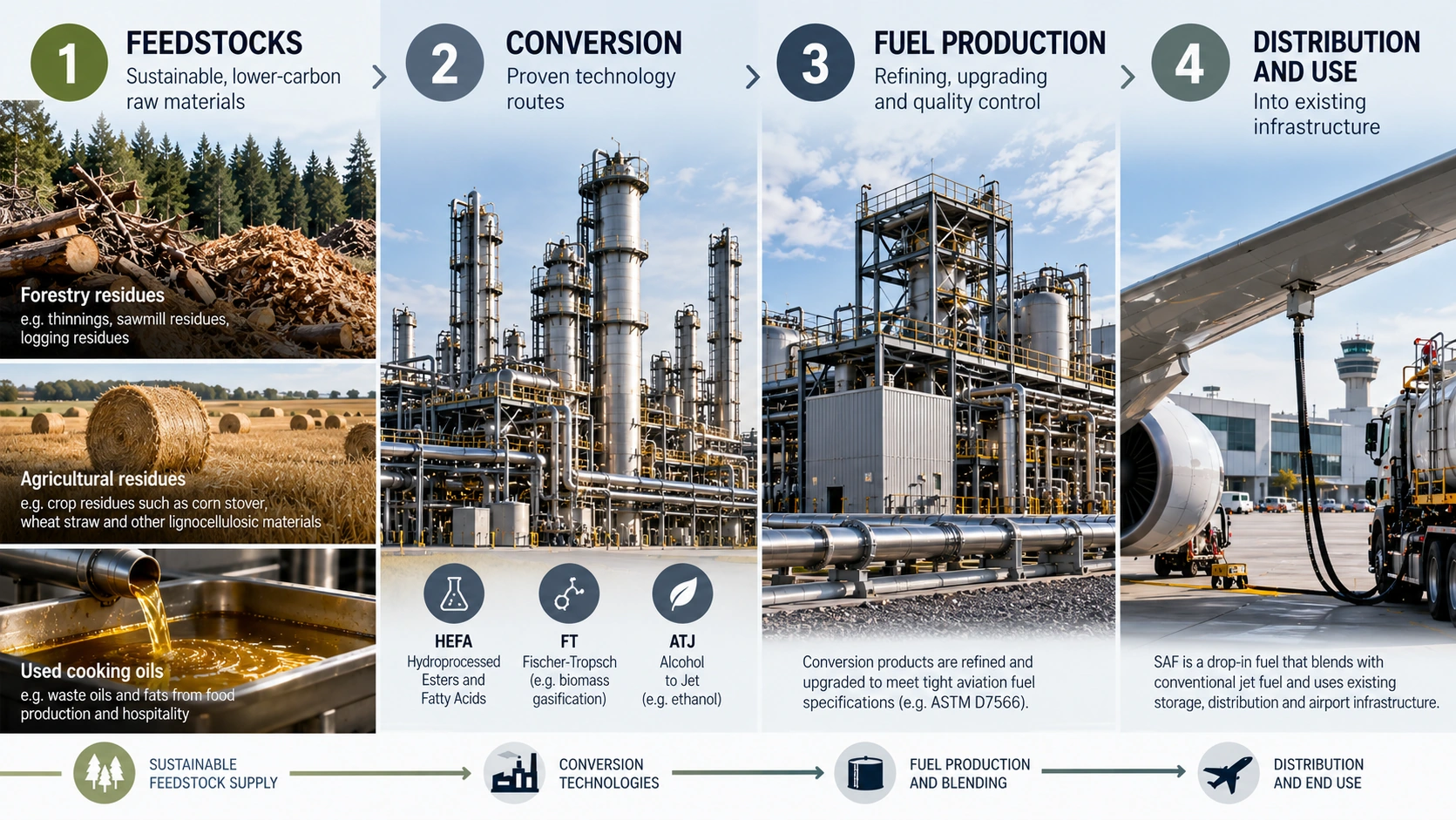
Simplified overview: the examples are not interchangeable inputs to one process. Feedstock suitability and sustainability depend on the pathway and applicable certification requirements. The graphic’s phrase “proven technology routes” refers to technical routes, not equal commercial maturity or a particular plant’s readiness. Blending and fuel-quality requirements are pathway-specific. This illustration does not depict real facilities.
Four routes worth recognising
HEFA means hydroprocessed esters and fatty acids. It processes oils and fats, using hydrogen and further treatment to produce suitable hydrocarbons. Feedstock availability, quality and origin matter.
Alcohol-to-jet starts with alcohols such as ethanol. Chemical reactions turn smaller molecules into hydrocarbons in the jet-fuel range. How the alcohol was made matters as much to the environmental assessment as the final conversion.
Biomass-to-liquids using Fischer–Tropsch synthesis can begin by gasifying solid material into synthesis gas. Cleaning, synthesis and upgrading follow. The process joins a feedstock-handling system to a fuel-production system.
Power-to-liquid, often called e-SAF when suitable renewable inputs are used, makes fuel using hydrogen and a carbon source such as captured carbon dioxide. Its energy supply is a fundamental part of the design.
These are broad explanations, not a complete list. DOE’s 13 November 2024 announcement of its SAF Liftoff report discusses the technical and commercial readiness of SAF pathways. A pathway’s technical potential does not establish a particular plant’s readiness or a feedstock’s eligibility.
How does it reach an aircraft?
Production is followed by fuel-quality controls, any required blending, testing, storage and distribution. The route depends on the product and supply chain. For technically qualified fuels used within their applicable conditions, the aim is compatibility with existing aircraft and fuel systems.
ICAO’s conversion-process reference explains the distinction between technical approval and additional sustainability requirements. Blend conditions are pathway-specific. This introductory article does not give one universal maximum blend percentage or substitute a historical web table for the applicable current specification.
Why the word “sustainable” needs evidence
A technically suitable fuel still needs evidence of its origin and environmental performance. It also needs to satisfy the rules of the market in which it will be used. Those are separate questions from whether the aircraft can use it.
When reading about a project, ask three things: what goes in, how it becomes fuel and what evidence supports the resulting product and claim. Then ask whether the reported number is design capacity, actual production or delivery. Those measures should never be treated as interchangeable.
Continue with What makes an aviation fuel sustainable?, then read SAF’s industrial reality: what it takes to deliver fuel for the operating challenge beyond the basic chemistry.
Sources and disclosure
Technical background: US DOE SAF overview; DOE SAF Liftoff report announcement, 13 November 2024; ICAO conversion-process reference, an evolving page containing historical tables. Reviewed 19 October 2026. Process descriptions are simplified; no current pathway count, universal blend limit or project eligibility finding is claimed.
SAFV1 was founded by CarbonCore, which publishes and currently supports the publication. Editorial responsibility rests with the SAFV1 Editorial Team. About SAFV1.
SAFV1 Monthly
The industrial reality, the foundations explained and verified developments worth following. Free, once a month. Confirm by email and unsubscribe at any time. Edition archive.
